Slipstream - ED1 WI4+ 925m
(I’m trying something new here - I’ve used this site almost exclusively for updates on guidebooks, and for other miscellaneous Frozen Limestone stuff. But I don’t exactly have a place to put more long form writing that’s not destined for journal articles, so here goes. Maybe someone will read this!)
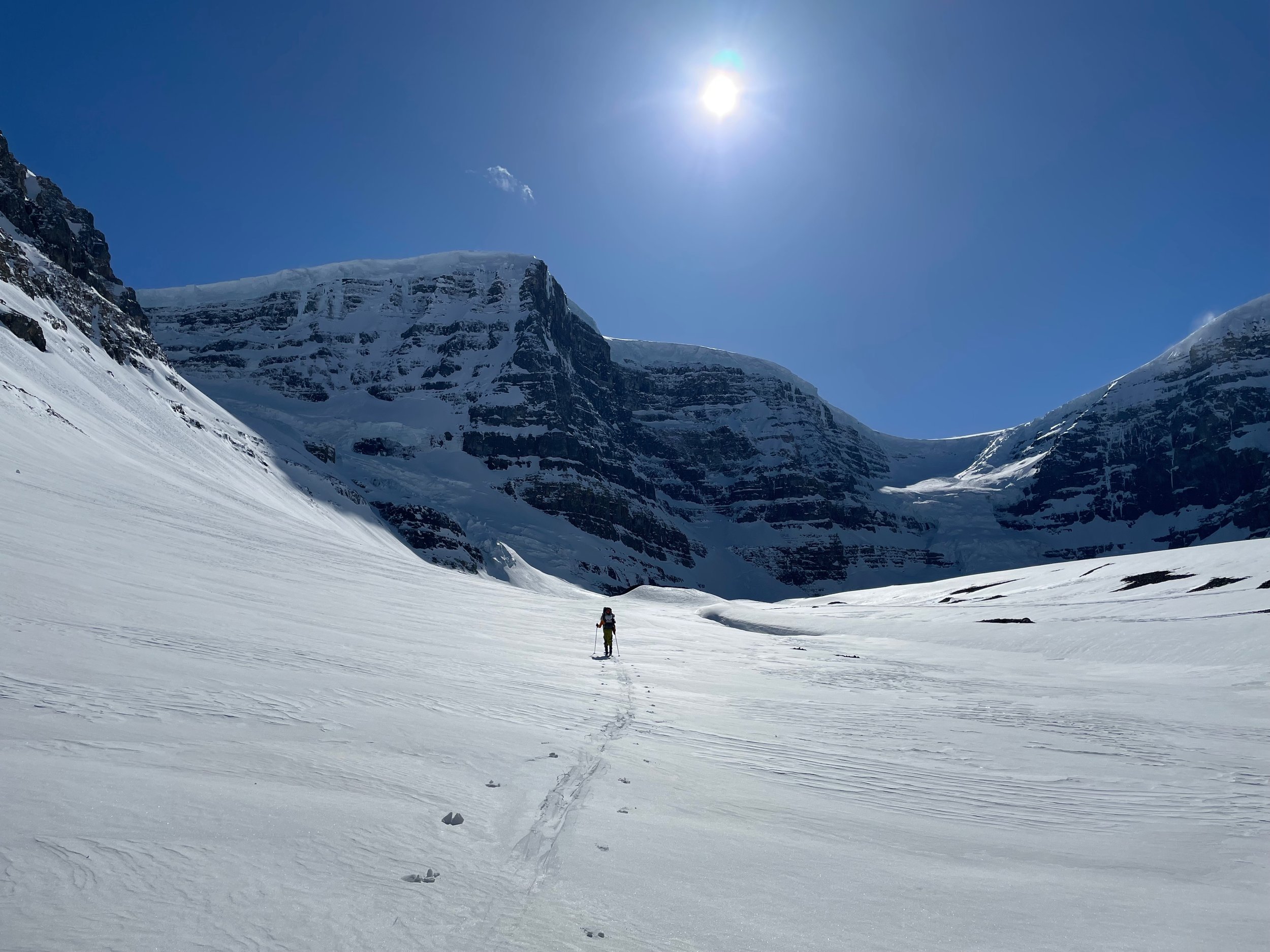
Greg approaching camp, with Slipstream above
If you’re a Rockies winter climber, Slipstream is on your list. A kilometre of steep snow and moderate ice leading straight up the ridge to the summit plateau of Snowdome? So cool.
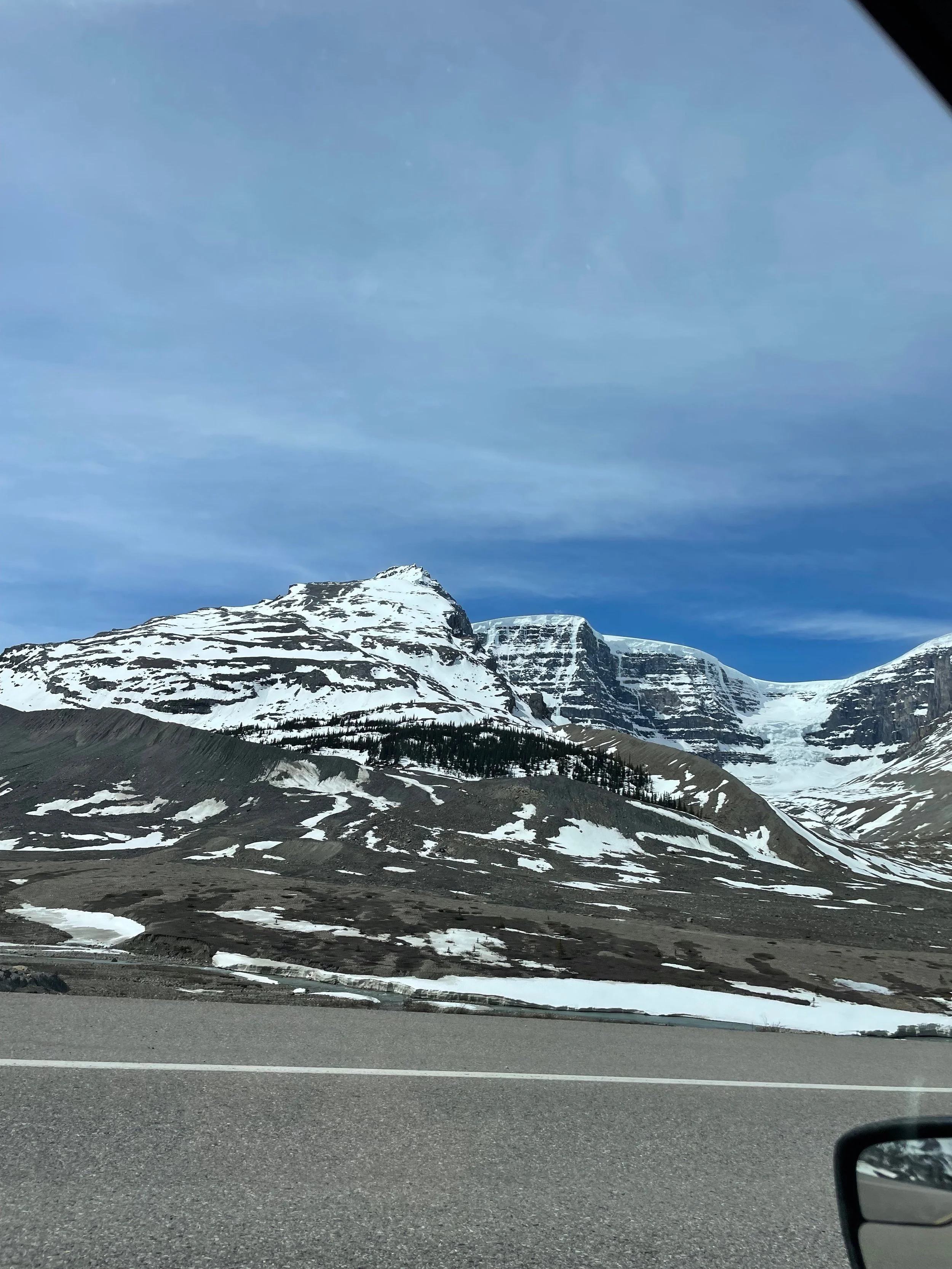
Well, it’s on one of your lists. Like many big alpine lines, the route has its hazards that turn off many climbers, most notoriously serac fall. The route is visible from the Icefields Center, and I’ve gotten to gaze at it every time I pass by the Columbia Icefields… something I do a lot of in my summers working as an apprentice alpine guide. I’ve even seen the summit seracs let go down the route a few times, with gigantic snow clouds billowing up from the Dome Glacier below.
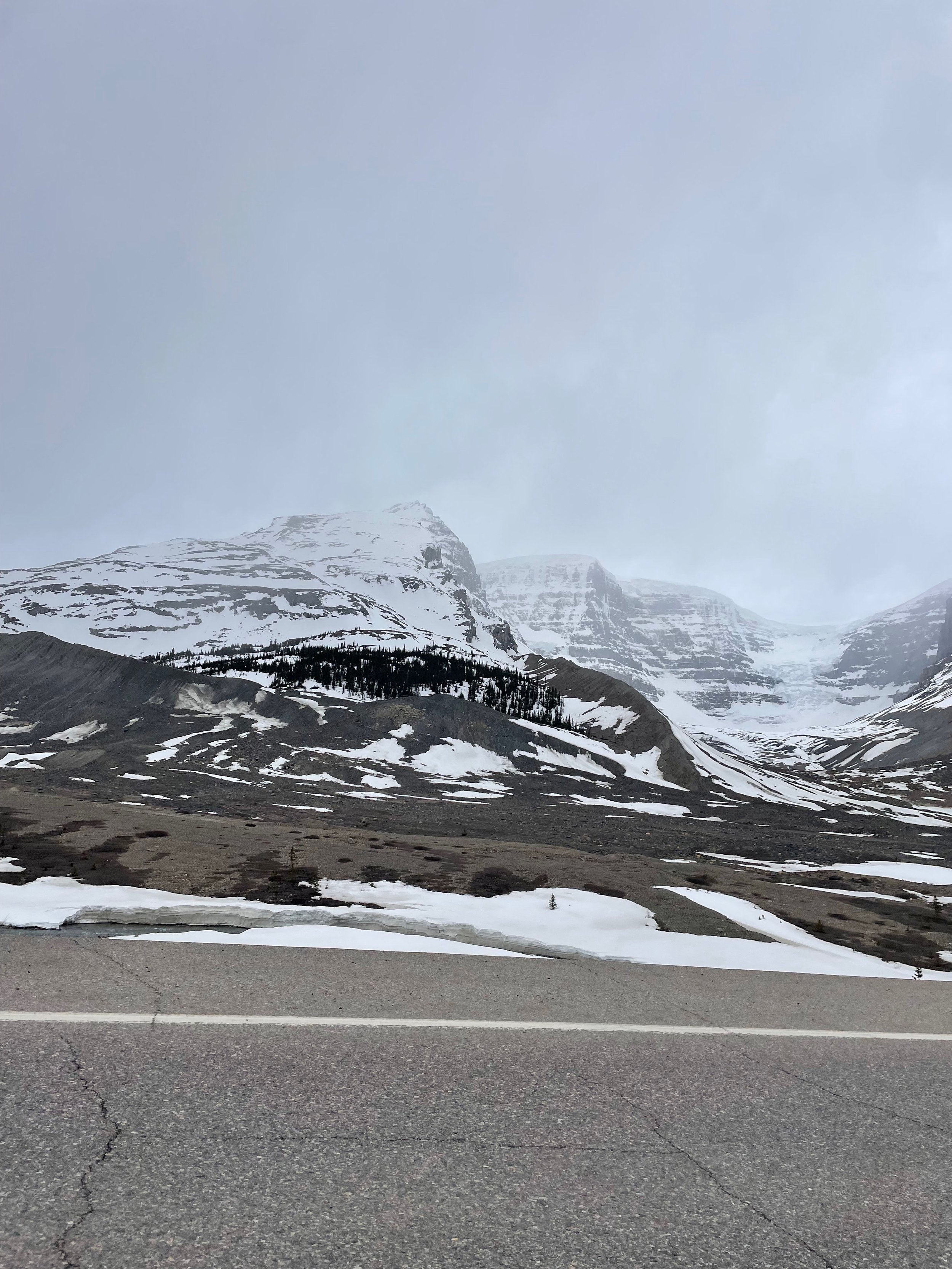
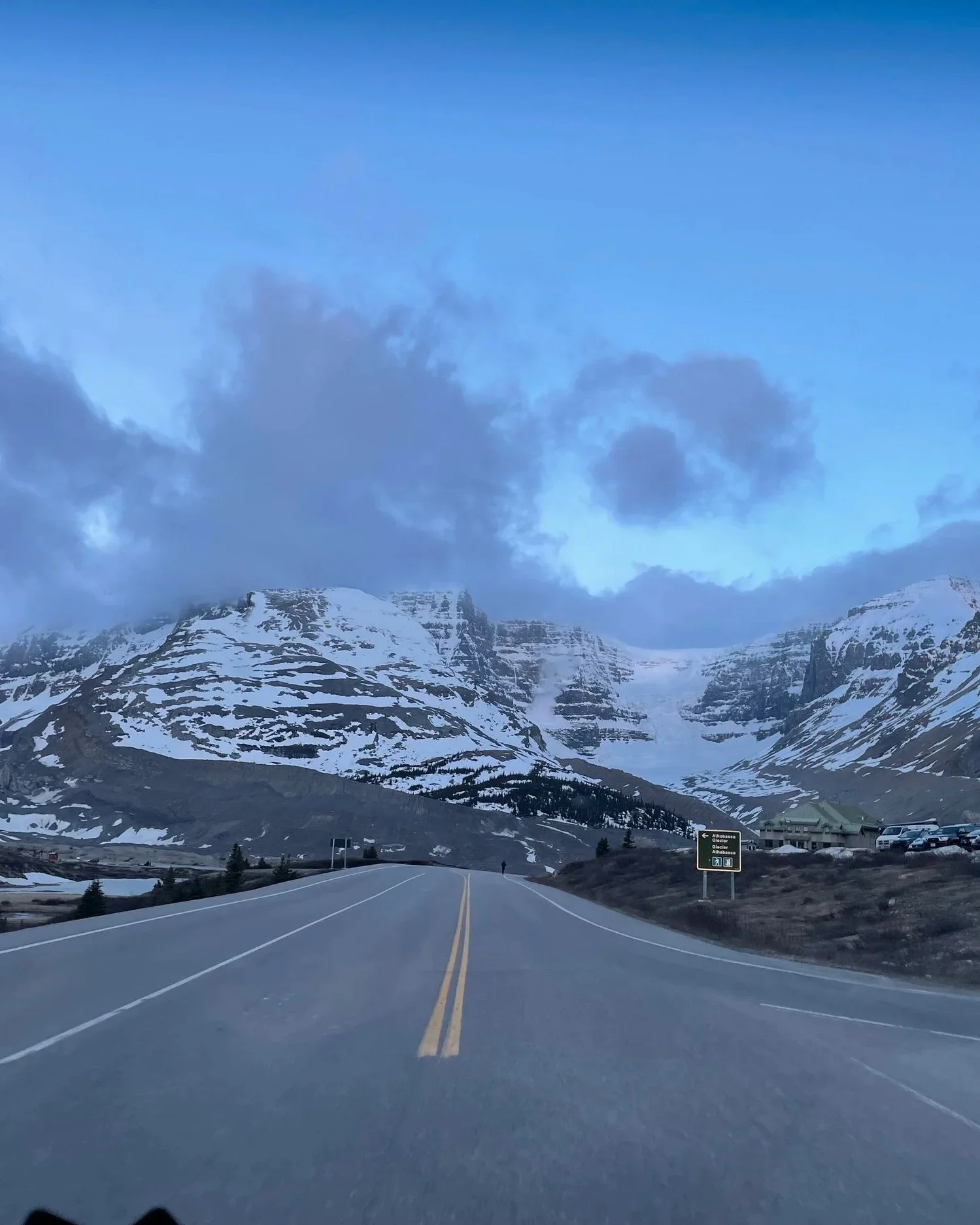
My main winter and alpine climbing partner, Greg Barrett and I had been talking casually about climbing the route for years, but every season it didn’t quite line up. But this spring, we were primed to go after it. And after carefully reviewing conditions and the risk, Greg and I decided that the time was right.
Five years ago, it would have been a very intimidating line for both of us. Not only was ED1 the hardest alpine grade for a route we’d attempted, it was long and would require us to move quickly for quite a distance. Now, it felt like a very reasonable objective, having climbed several TD and TD+ routes together and with other partners in the past few years. As long as nothing went unexpectedly sideways, it should be pretty smooth sailing.
Just out of Canmore, things went sideways. I’d been mixed climbing up at the Cineplex the weekend before, and I’d procrastinated enough with packing that I planned to swap my picks and tool handles on the drive. Unfortunately, I was missing a critical bolt for my tool handle. Rather than adding an hour to our already-long drive, I improvised a fix on the fly with some baling wire.
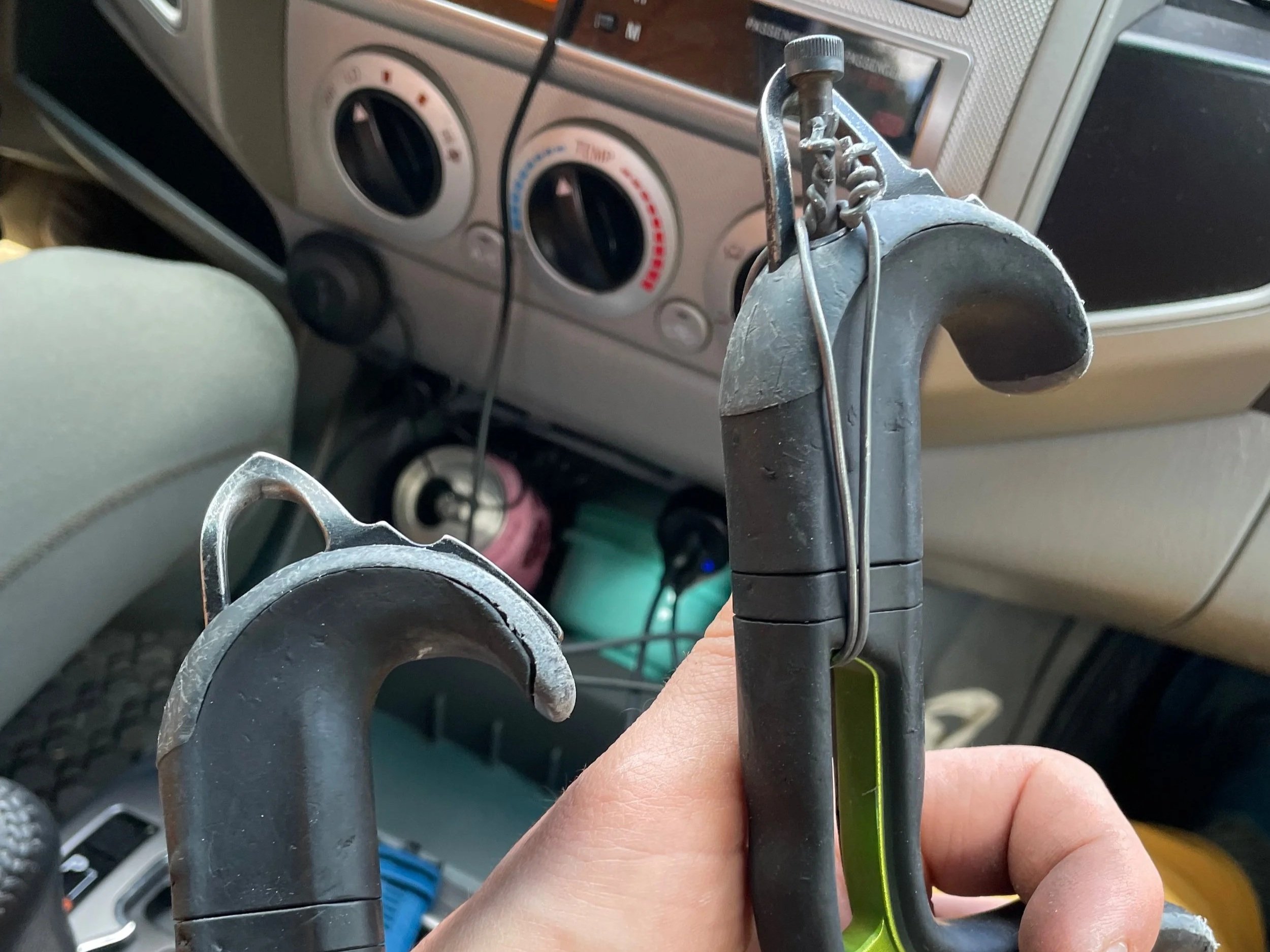
Baling wire to the rescue!
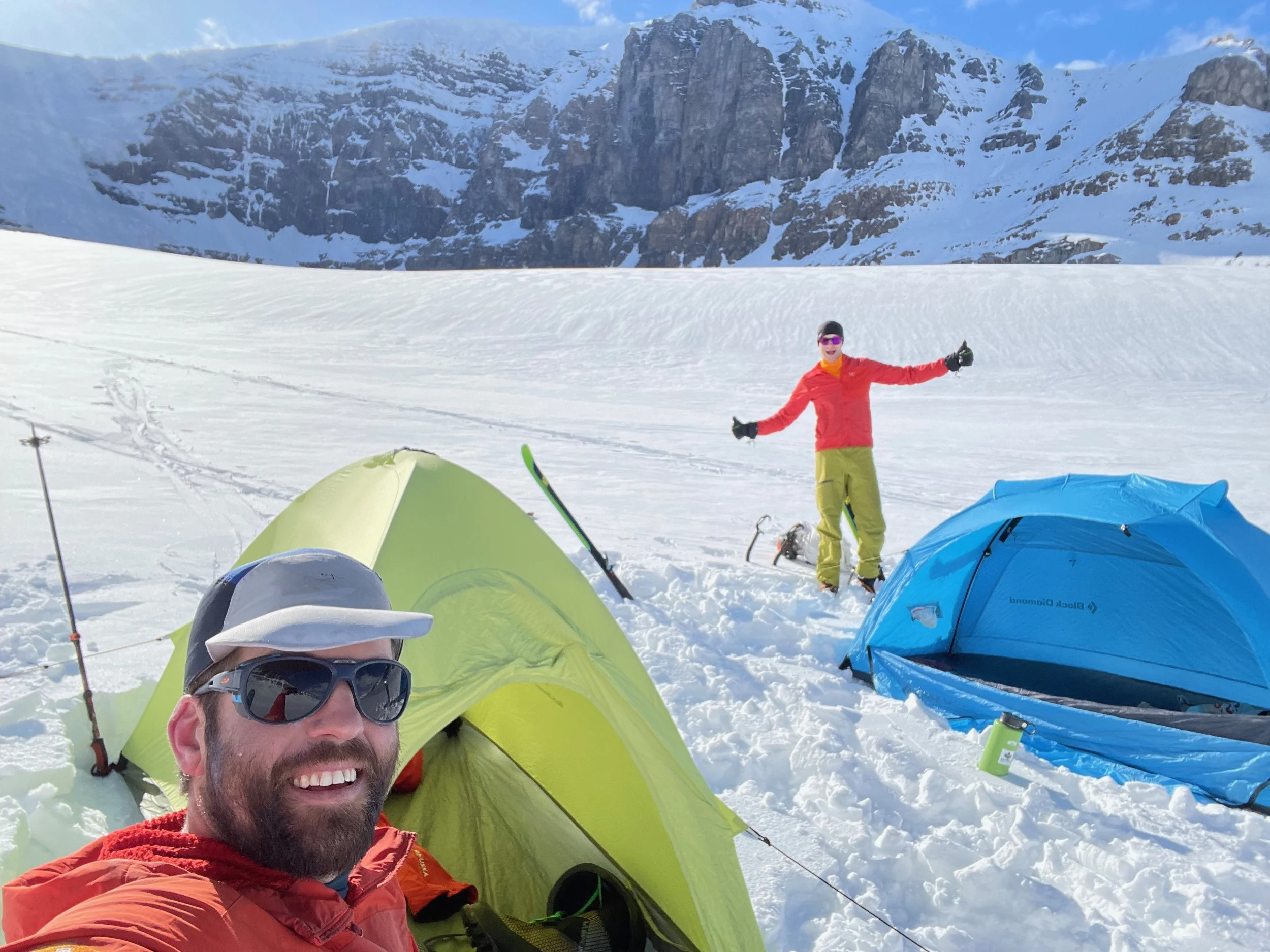
Camp below the route. Before we found we had no working stove.
At camp, things went sideways further. We’d skied in, set up camp and were just about to melt some snow for dinner and to drink on the route the next day. But the stove was dead - no fuel was moving through it at all. I wanted to temporarily bail - leave our stuff, ski out and come back in the next afternoon with a new stove. Greg wanted to just eat snow for two days, get dehydrated and climb the route, not necessarily in that order. Baling wire came to the rescue again. While fiddling with the stove to try and get it to work, we found that we were able to use wire to push in the pin on our fuel canister, light the stream of gas, and hold the pot over the fireball to melt snow. Despite the valve melting open, we persisted - draining one canister of gas and getting a whole 3.5 litres of precious (cold) water. We were back on.
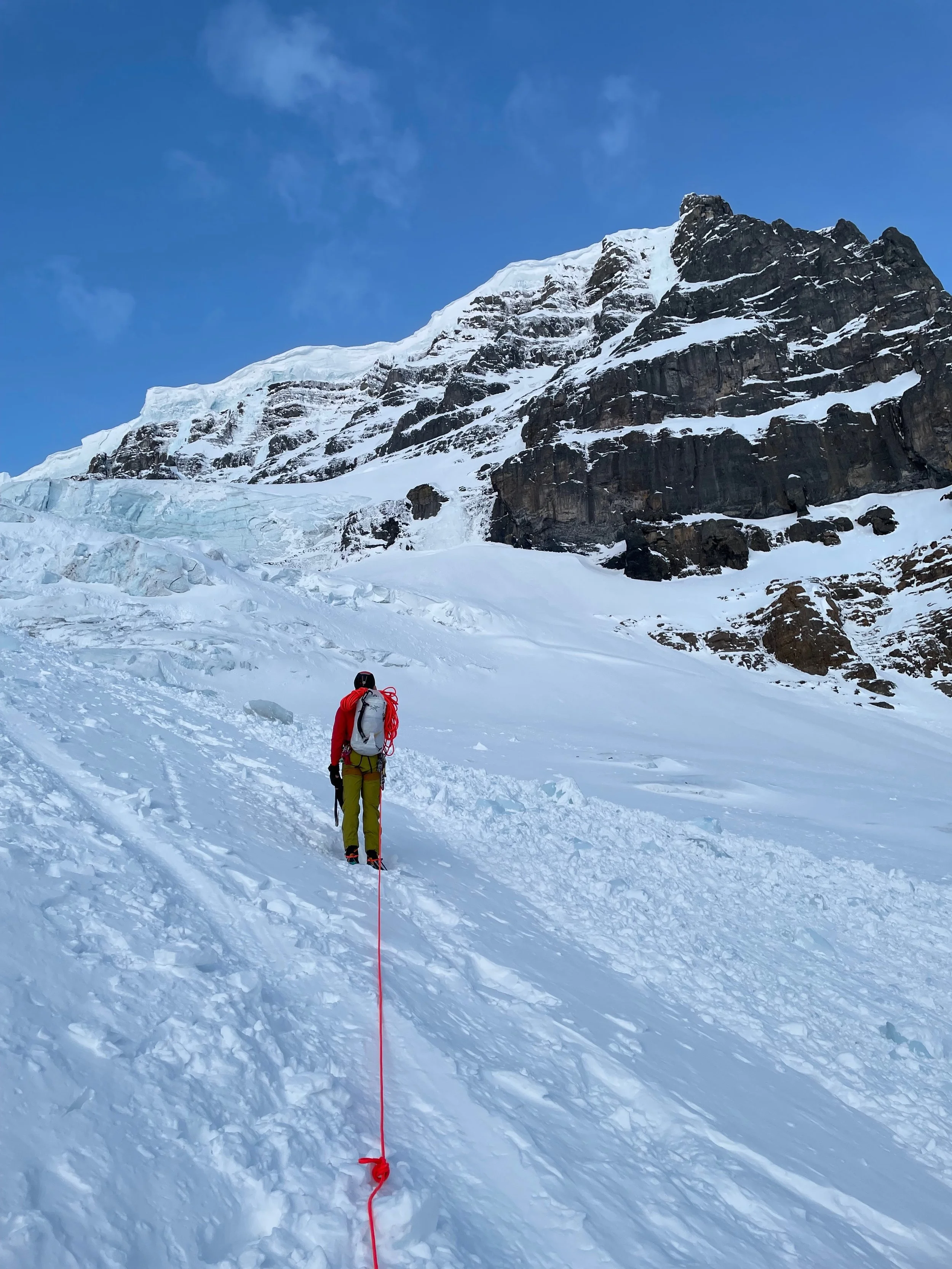
The next morning, we rolled out of our sleeping bags into the predawn, -15ºC air. Scarfing down a cold breakfast, we decided the best way to warm up would be to start walking. Within an hour of leaving camp, we’d punched up the glacier to the first ice pitch. We flaked the rope, and I set off. Three long simulclimbing blocks with everything from steep ice, thin shells, and bomber neve brought us to the upper ice just as the ridge came into the sun. Greg took over for a few pitches of steeper but stepped ice. Then I swung back in front to take us first to an airy position on the final snow arete, and finally to the ice cap.
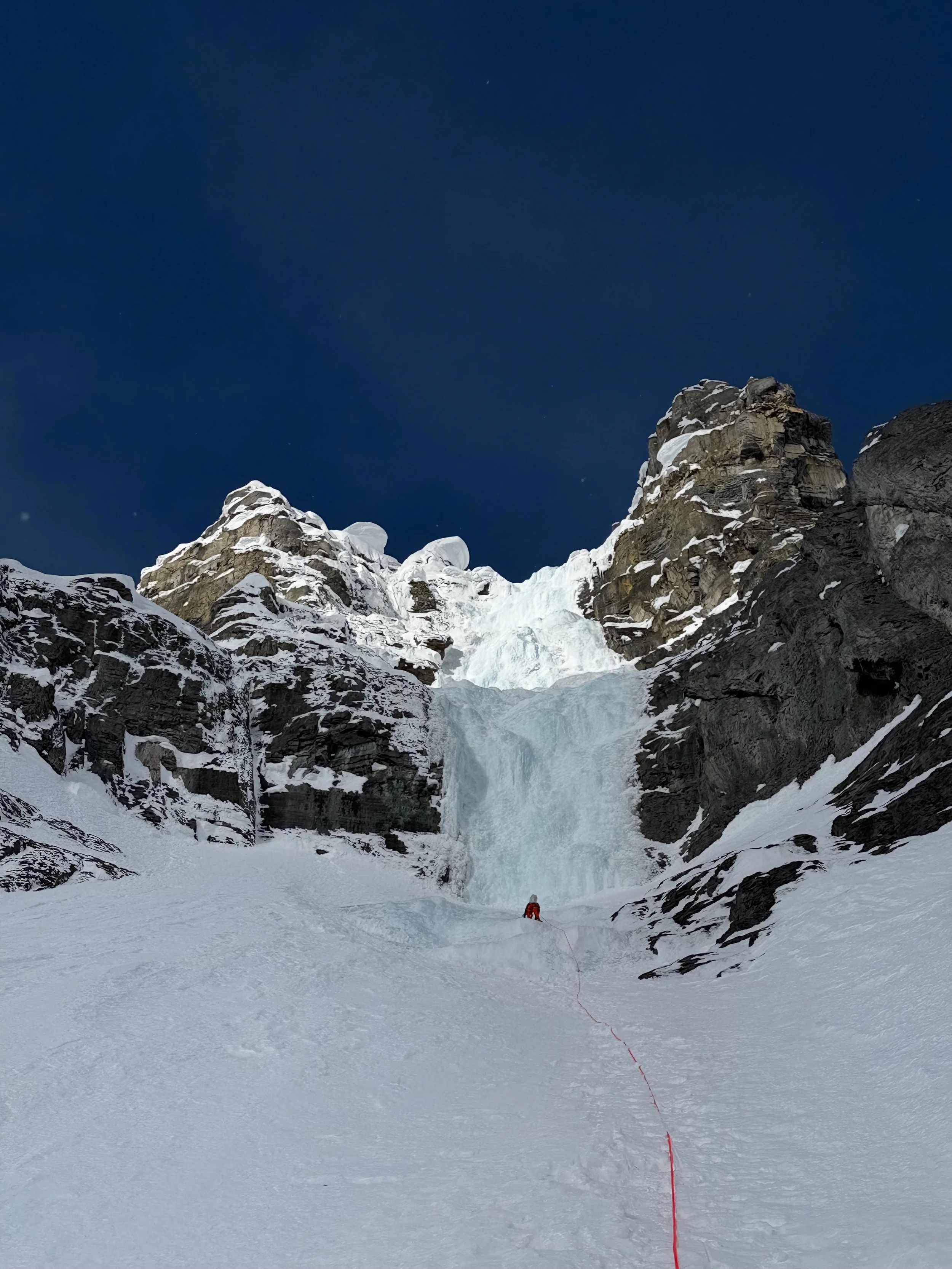
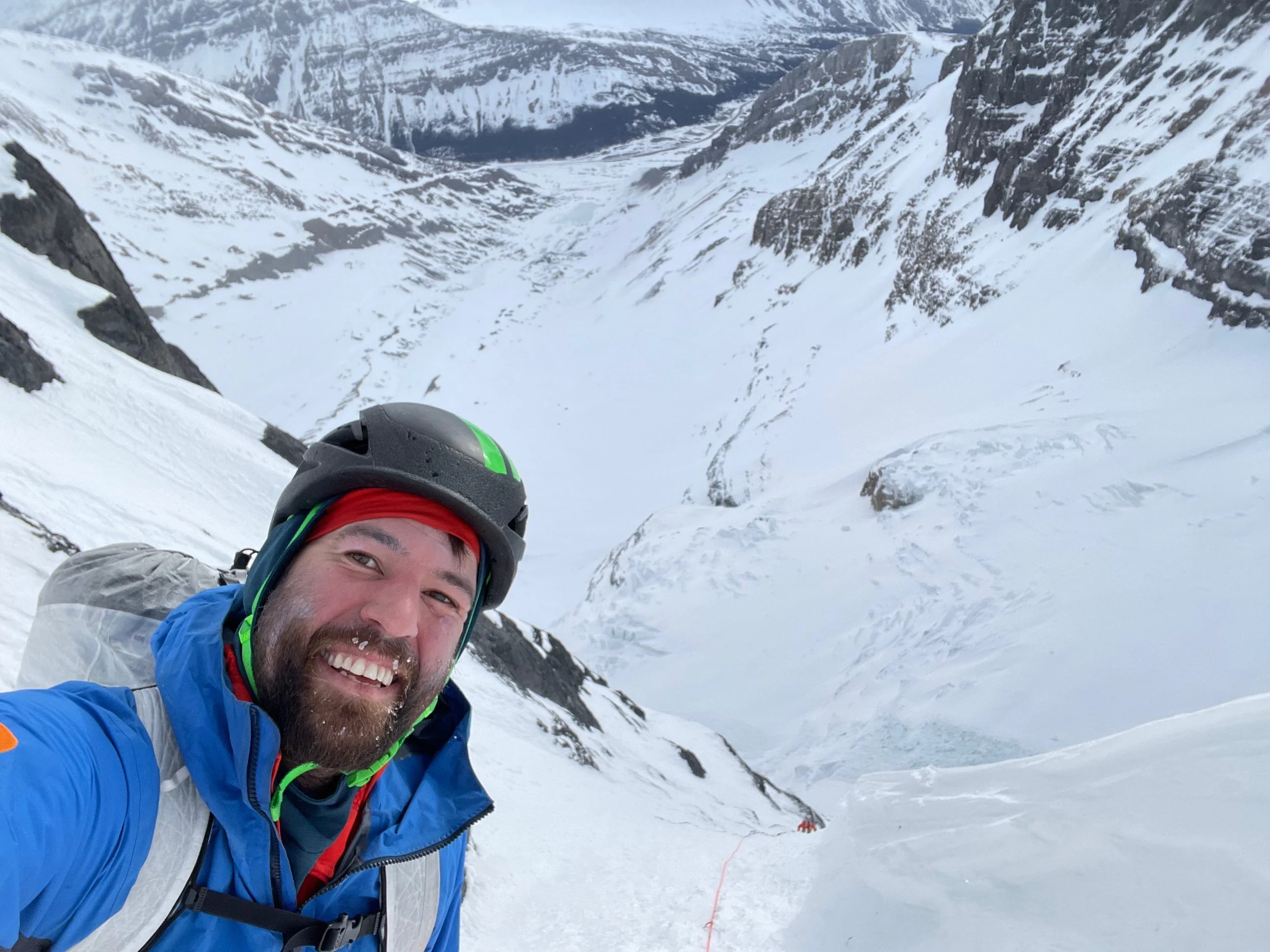
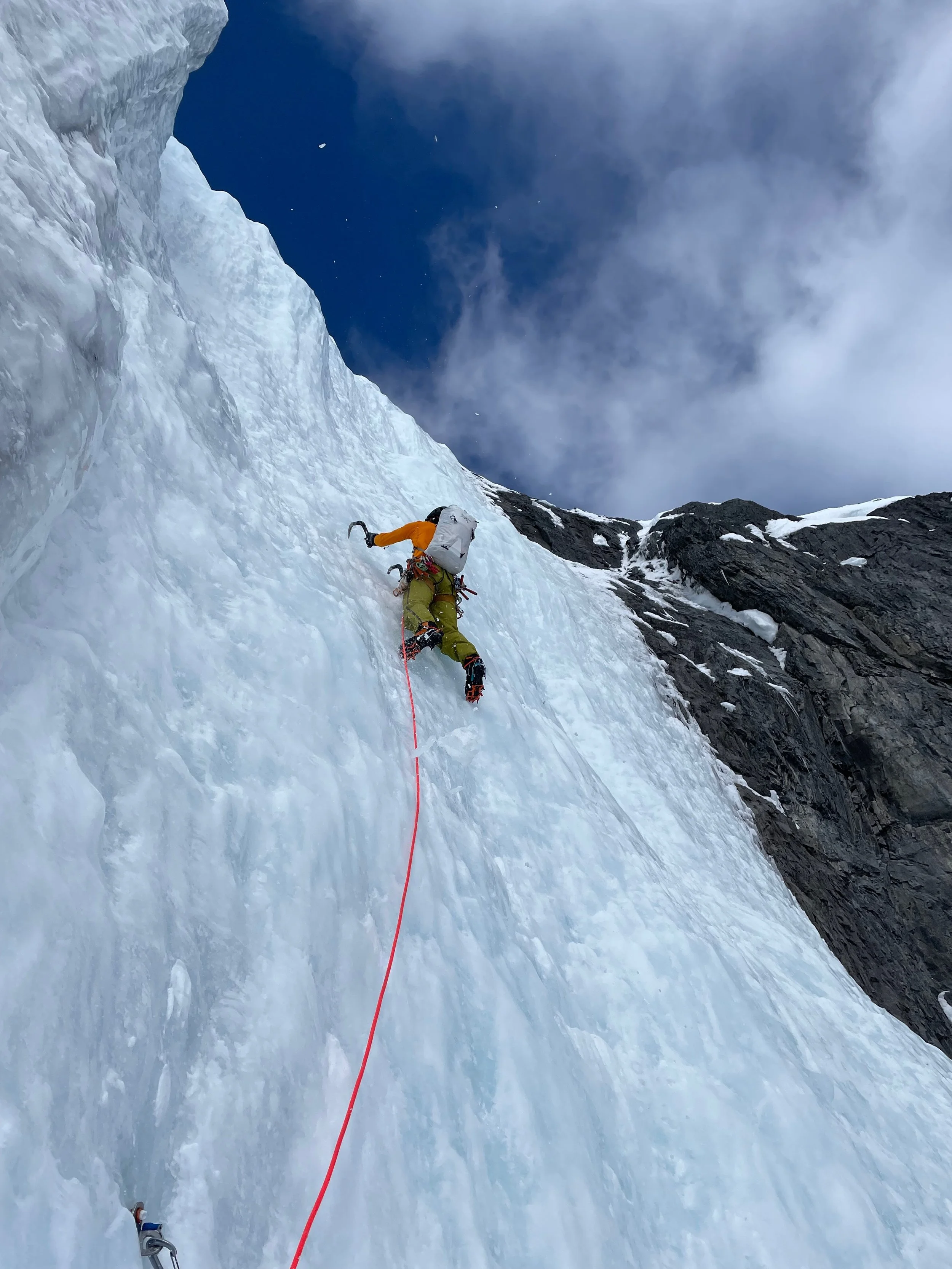
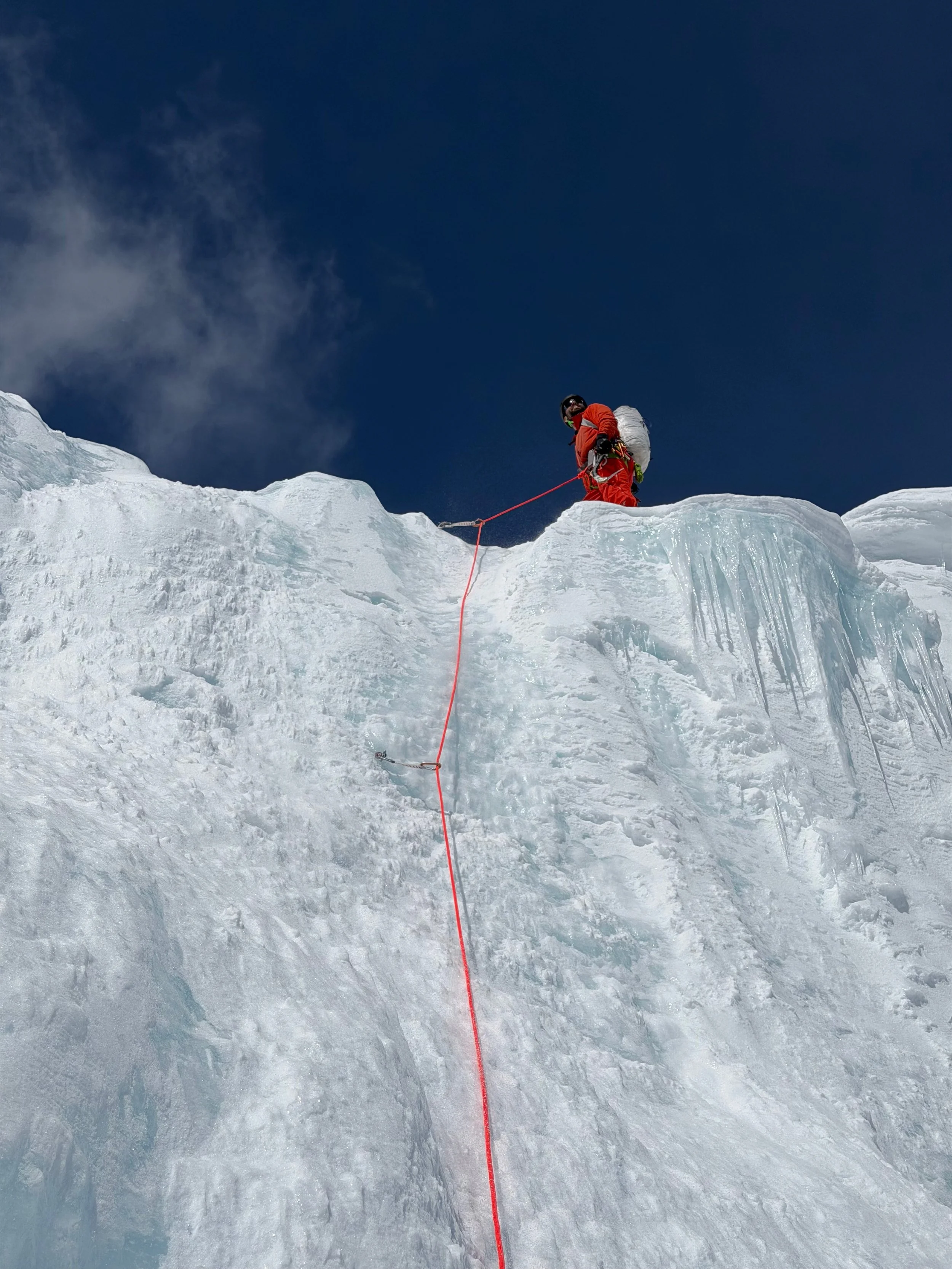
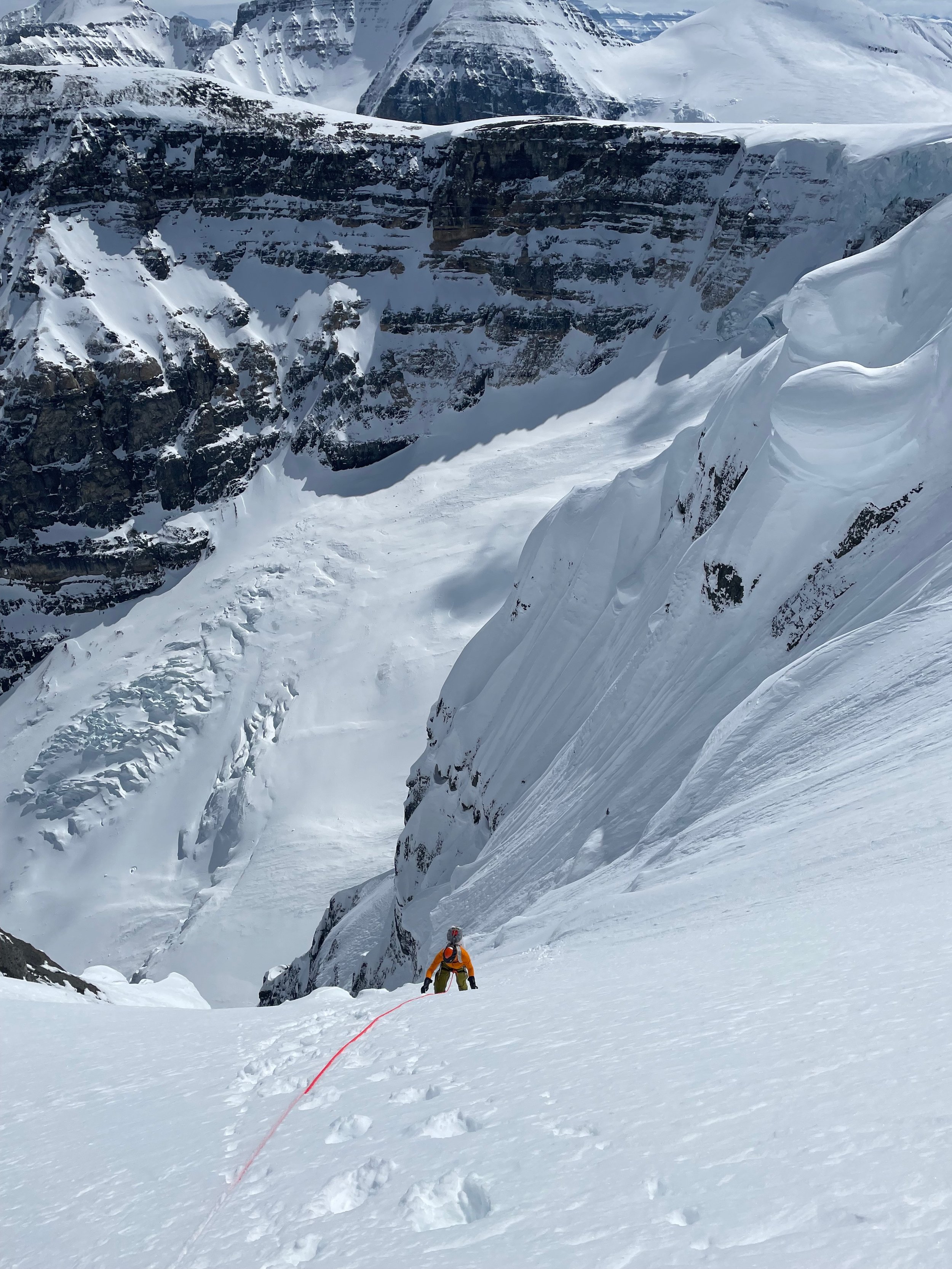
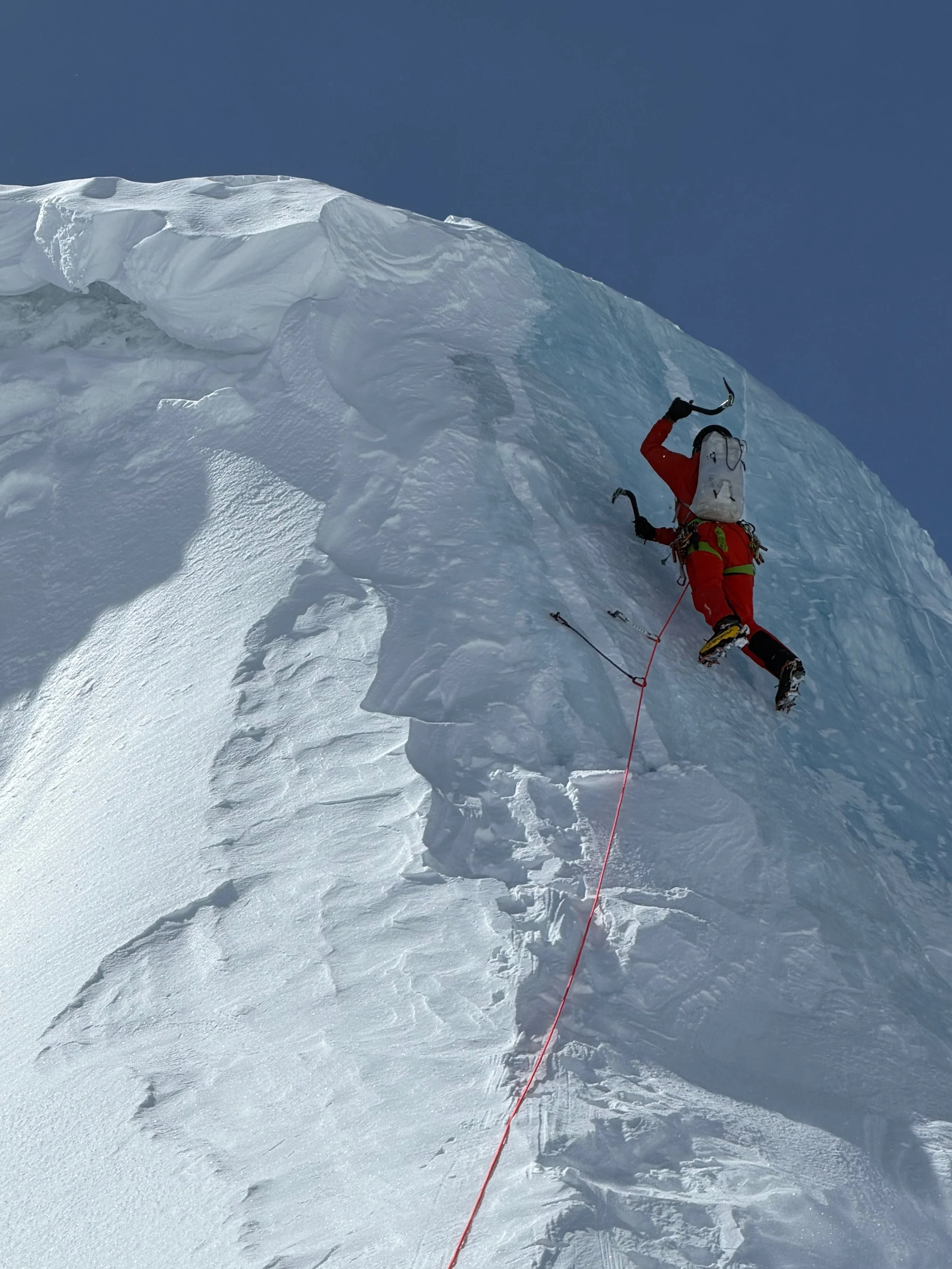
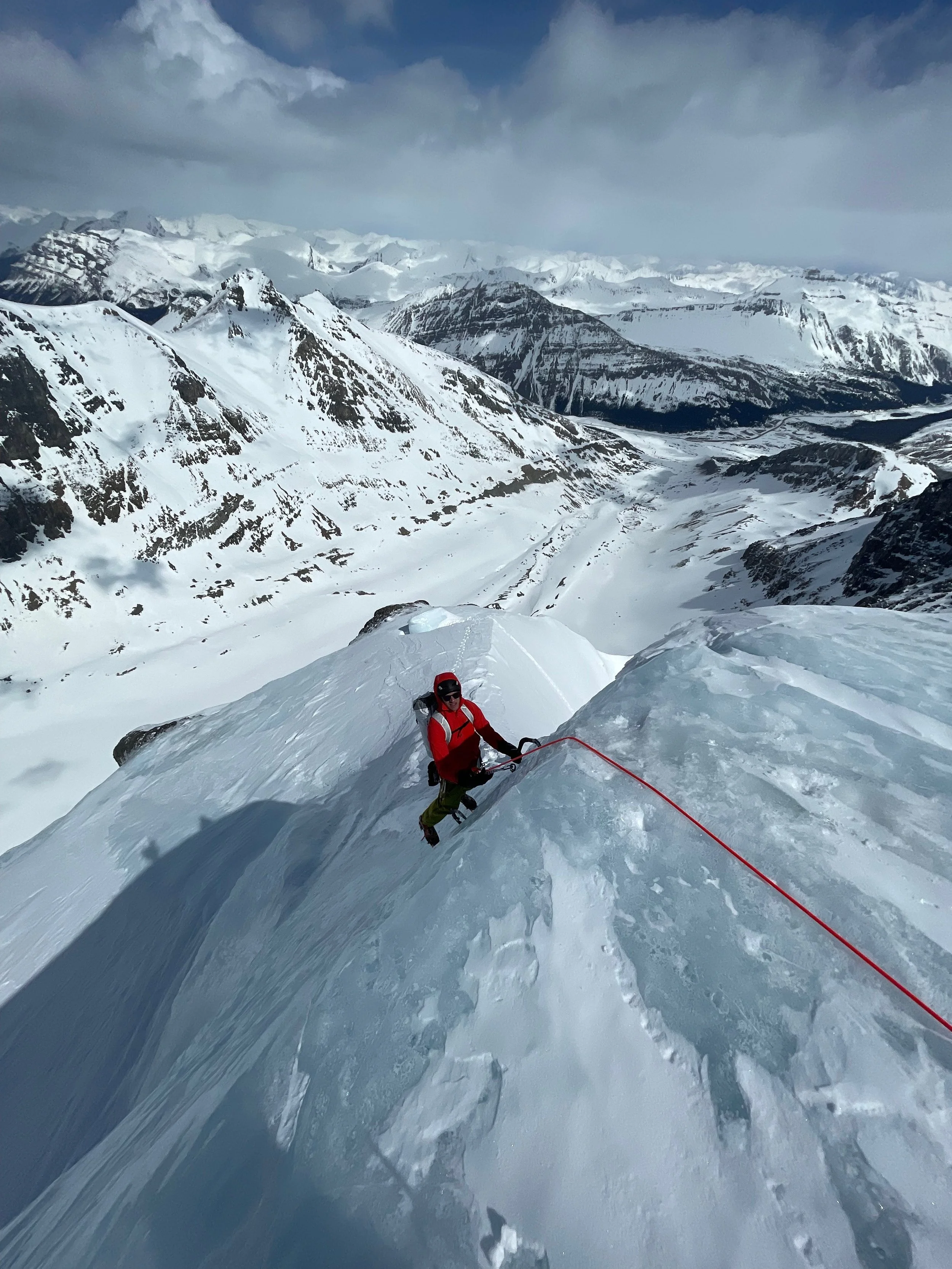
Slogging sideways across the glacier to the summit through punchy sastrugi, we started feeling the pinch of dehydration. Greg had given me most of our melted water, opting to eat snow - but he was refreshed by unexpectedly meeting our friend Tim Banfield on the summit, who donated his water supply to the cause. Once Tim skied away, we decided we’d better get on with the descent.
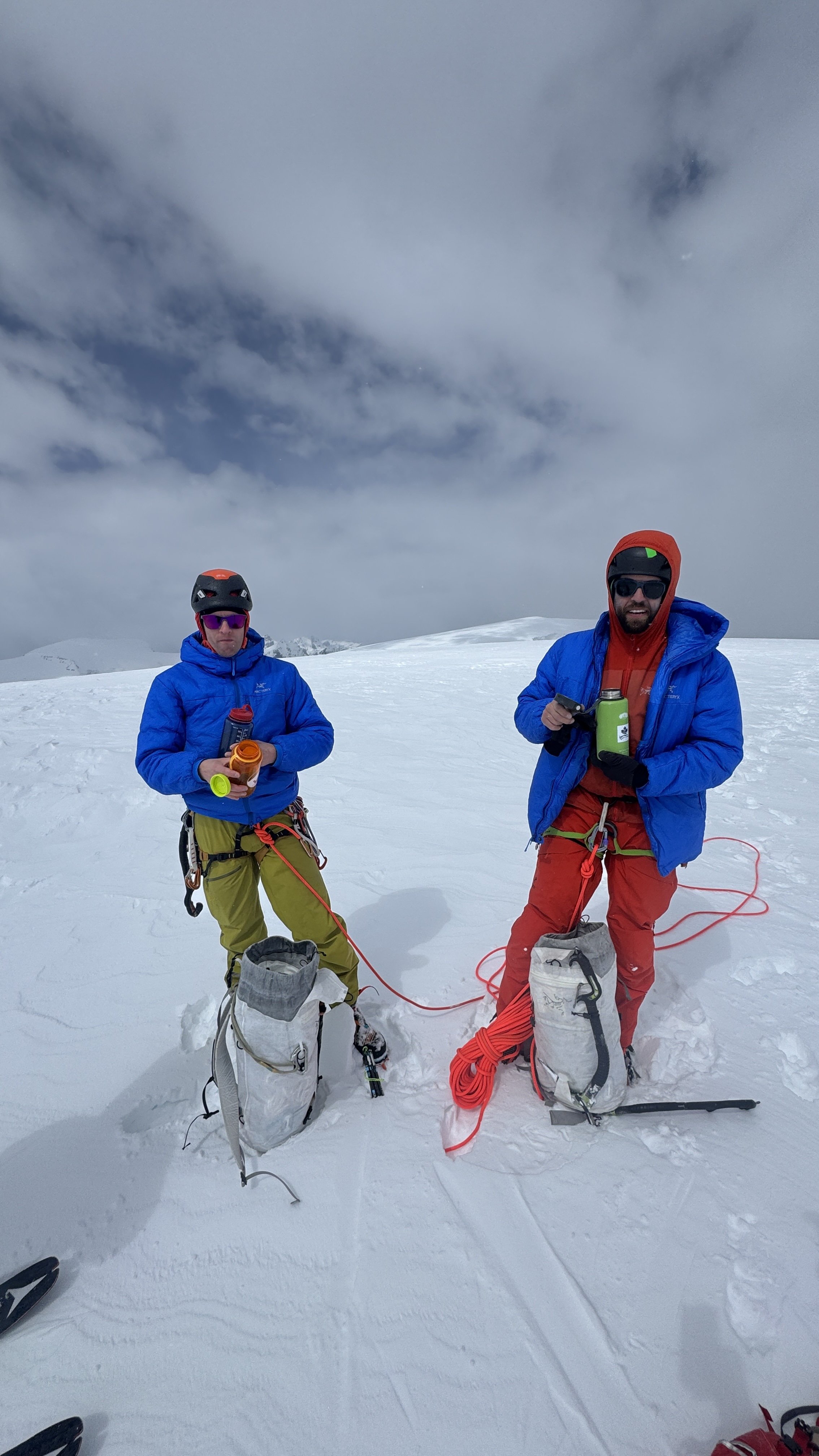
Summit refreshments! Photo: Tim Banfield
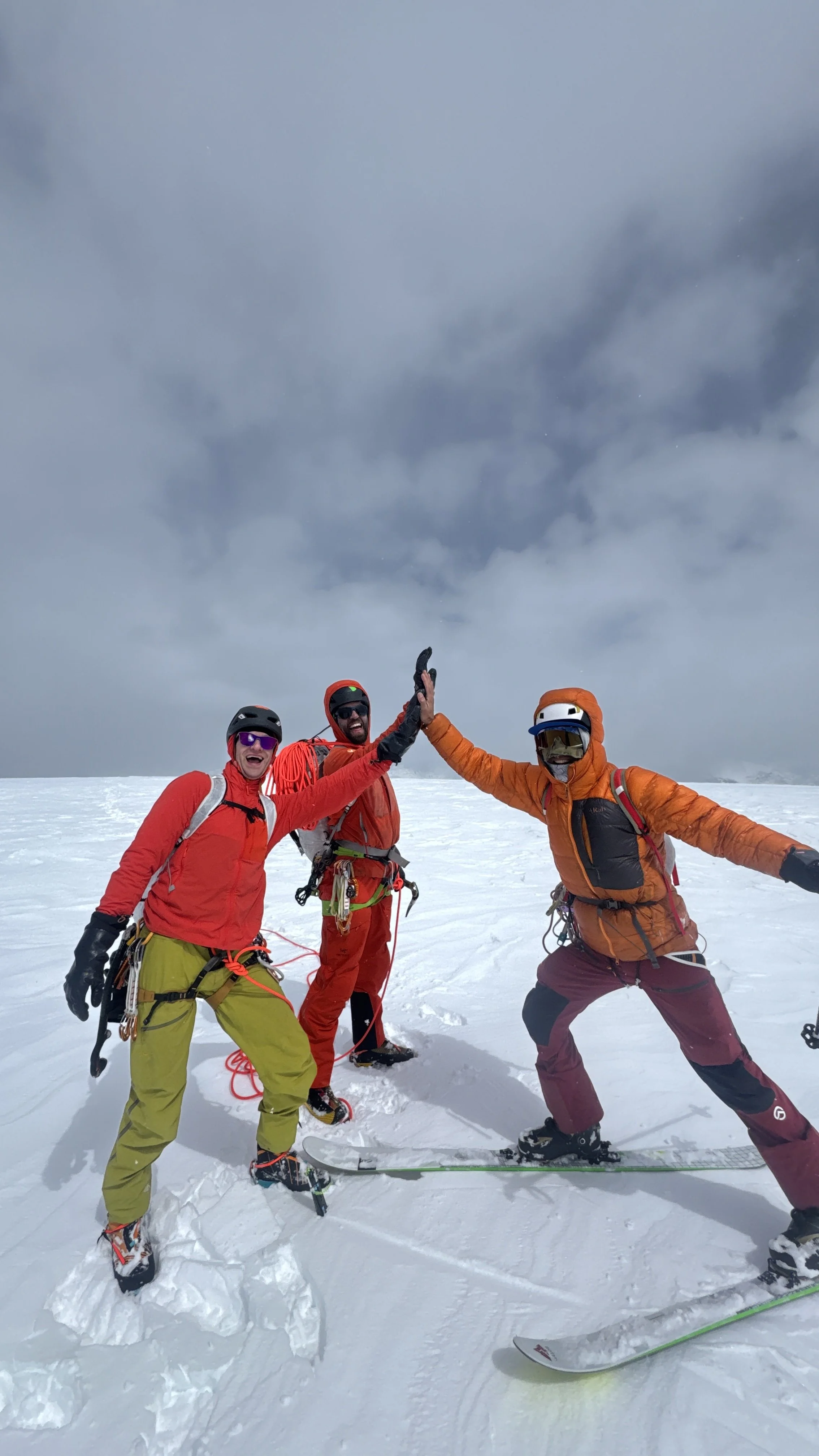
What a coincidence!
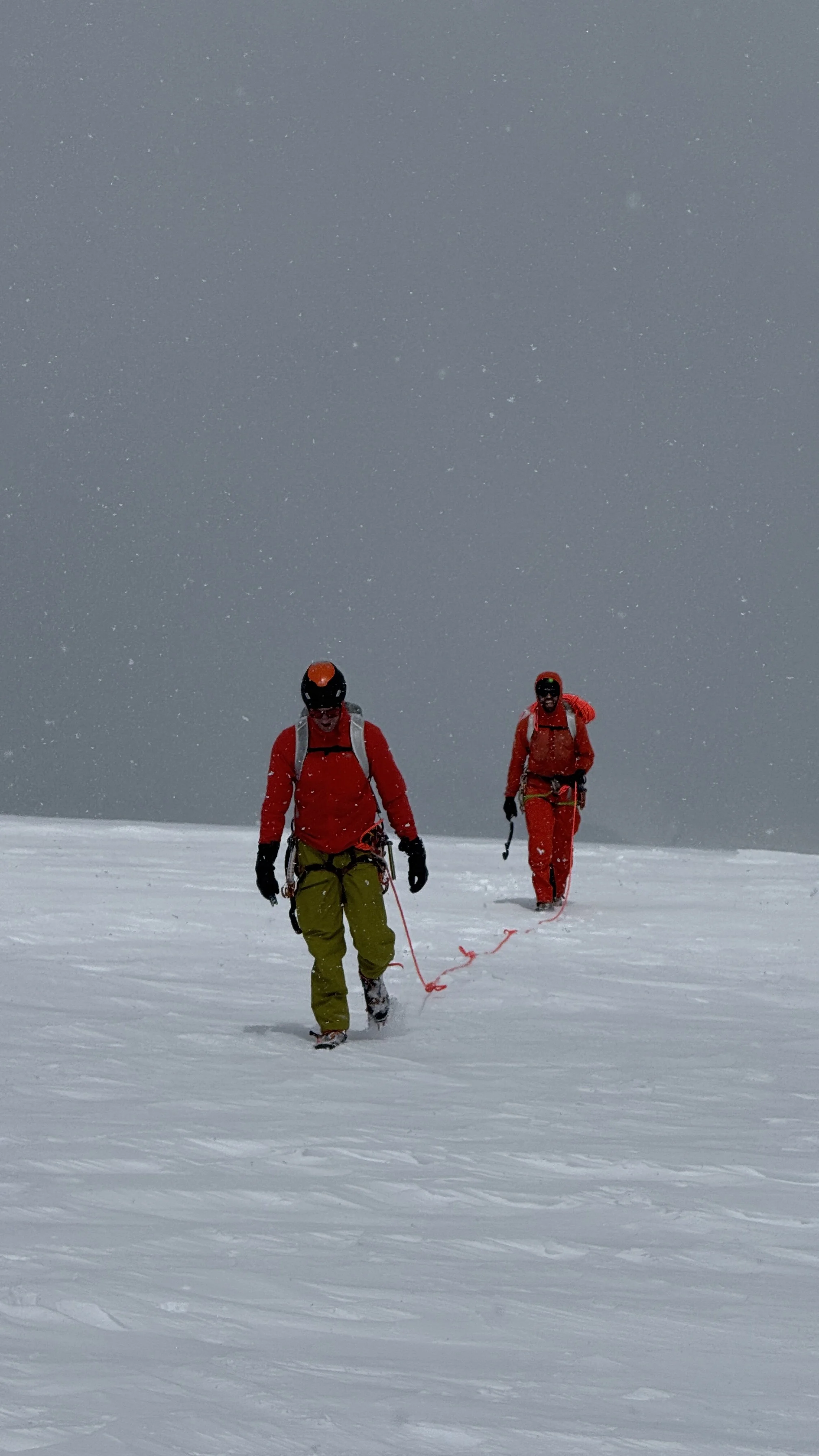
The last approach to the summit! Photo: Tim Banfield
Descent went sideways. Again. We first tried probing the snow along the col for some lightly buried glacier ice, but the best we found was still over 60cm deep. Further across, the descent gully had a large looming cornice and no accessible ice. While scouting out this line, I found a couple old ice screws and a long length of rope, somehow fixed into the snow and forgotten. We cut off as much of this rope as we could and headed back to the glacier. We drove one screw into the ice, fixed the old rope to it, and rappeled down over the cornice.
I got down to Greg to find that the only nearby ice lay under a gigantic serac. And we’d have to rappel once more off the end of the fixed rope to get there. I went first, kicking steps and slowly traversing underneath the worst overhead hazard we’d had all day. I pounded in a screw anchor, a V-thread, and barely daring to breathe we rappelled as fast as possible to the slopes below. Two more stressful rappels followed, but each one took us further and further out of danger.
Down on the lower glacier, we dared to breathe again. Roping back up, we quickly trekked back across fields of serac debris, stomped down snow along the side of a couple of icefalls, then slid down a snowy gully into camp. A bare hour later, we’d packed up camp and skied down the slushy moraines to the road, and the truck which would take us home.
All in, a pretty stellar adventure as always in the alpine… it’s just hard to figure out where that adventure will come from!